Are TikTok Shop targeted promotions useful for retention?
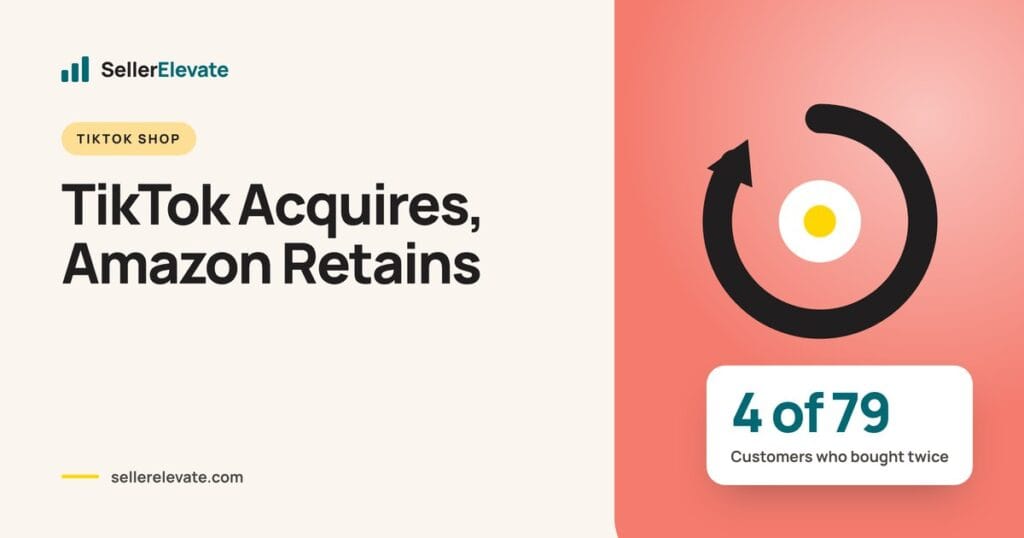
Not on a young shop. In one live TikTok Shop, 79 people bought in the past ninety days, only 4 bought twice, and the repeat segment was too small to show a number. Spend promotion budget on acquisition segments like cart adders and engaged followers, and use Amazon for retention.
Key takeaways
- TikTok Shop is built for acquisition: in our data, creator content drove about 80% of shop GMV at an average order value just under $20.
- On a young TikTok Shop the retention segments are nearly empty, so targeted promotions can only do acquisition work.
- Prioritize the 'potential new customers' segment of favouriters and add-to-cart shoppers, the highest-intent group available.
- Amazon's Brand Tailored Promotions have no setup fee or platform charge but require Brand Registry; TikTok's segments have no such gate.
- Treat the repeat customer segment as your real progress metric, not GMV, follower count or affiliate sign-ups.
TikTok Shop has built out targeted promotions, and the architecture is recognisably Amazon’s. Segment your customers, offer each group a different discount, spend margin only where it changes behaviour.
Here are the segments a TikTok Shop presents:
| Segment | Definition | Size |
|---|---|---|
| Recent customers | First purchase in the past 90 days | 79 |
| Potential new customers | Favourited an item or added to cart | 114 |
| Existing active followers | Followed and engaged through LIVE | 79 |
| New followers | Started following in the past 30 days | 25 |
| Frequent customers | More than one purchase in the last 90 days | 4 |
| Repeat customers | Previously placed orders | < 1 |
Read the bottom two rows again.
Seventy-nine people bought in the past ninety days. Four of them bought twice. The repeat segment is too small for the platform to display a number at all.
That is the whole story of the channel
TikTok Shop is exceptional at acquisition. In our own data, creator content drove about 80% of shop GMV, at an average order value just under $20, from people who were not shopping for anything when the video appeared.
That mechanism is also why retention barely exists. A shopper who found you because a creator’s video interrupted their feed has no relationship with your brand. They did not search for you, compare you, or decide you were the right answer. They saw something, it was cheap, they tapped. Three months later they have no reason to return and no habit that brings them back.
This is not a criticism of the platform. It is the defining characteristic of impulse commerce, and it has been true of every channel built on interruption rather than intent.
But it changes what the promotion tools are for.
Why are TikTok Shop retention segments empty?
Look at how Amazon’s Brand Tailored Promotions are actually used by brands that run them well. The high-value plays are retention plays: win back a lapsed buyer with 15 to 20% off, nudge a cart abandoner with 10 to 15% in a seven-day window, cross-sell recent customers onto an adjacent SKU. The segment you deliberately underspend on is repeat customers, because they were going to buy anyway — discounting them is margin handed over for revenue you already had.
Now apply that thinking to the table above. The retention segments contain four people and fewer than one. There is nothing there to win back and nobody to reactivate. The only segments with usable volume are acquisition segments: 114 people who favourited or added to cart, 79 followers who engaged, 25 new followers.
So on a young TikTok Shop, targeted promotions can only do the job that broad discounting already does — acquire. The precision that makes the tool valuable on Amazon has nothing to be precise about yet.
That is worth knowing before you spend a week building segment-specific campaigns.
On "lower costs", a correction
It is tempting to say TikTok’s version is cheaper. On the promotion tool itself, it isn’t.
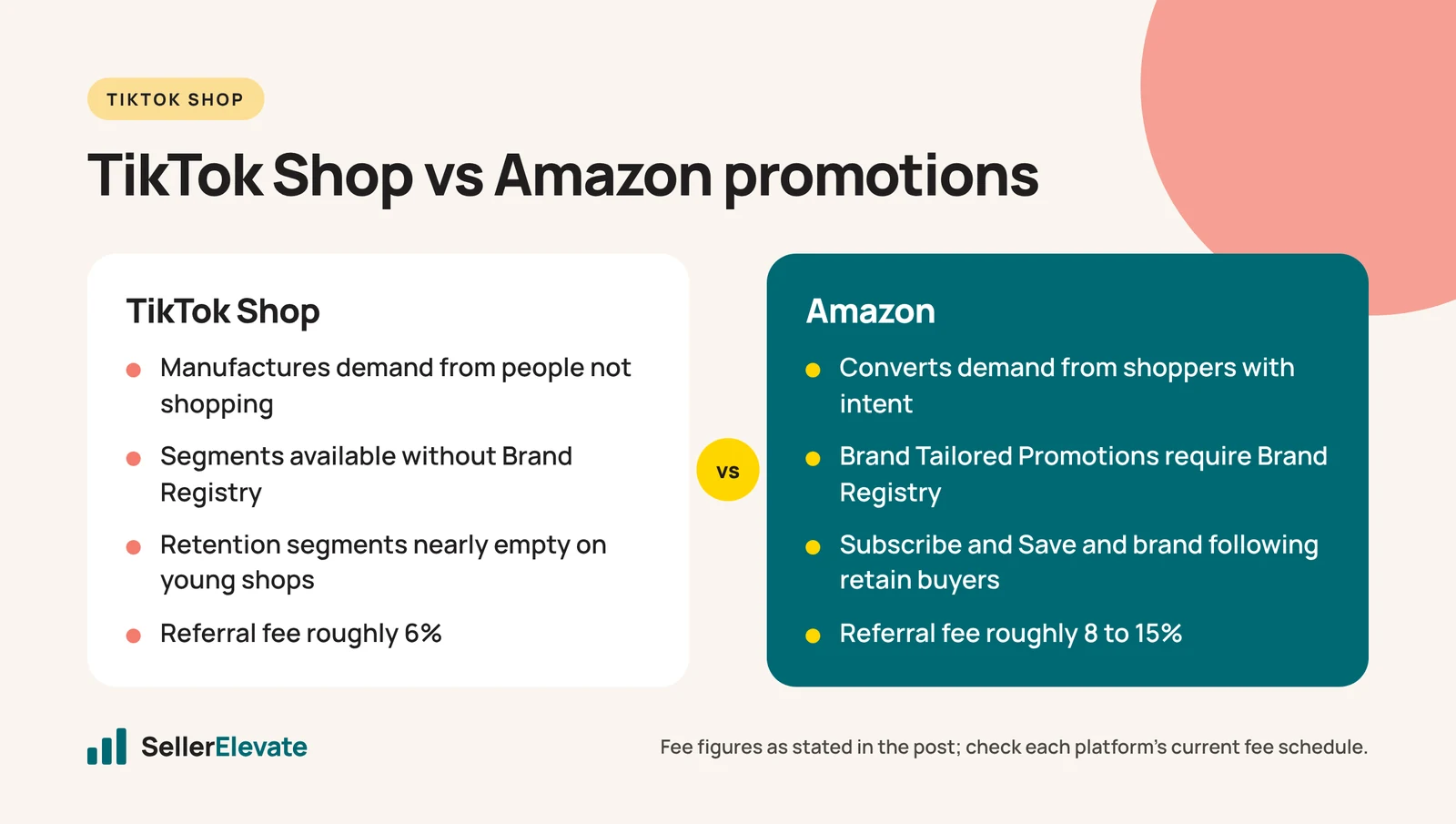
Amazon’s Brand Tailored Promotions carry no setup fee and no platform charge. You fund the discount and nothing else. Same structure. The cost difference between the platforms sits in the referral fee underneath — roughly 6% on TikTok Shop versus 8 to 15% on Amazon — not in the promotional machinery.
There is one genuine seller advantage on TikTok’s side, and it is worth naming precisely: Amazon’s tool requires Brand Registry. You need a registered trademark and a Brand Representative role before you can touch it. TikTok’s segments appear without that gate. For a young brand that has not completed trademark registration, TikTok’s promotion tools are simply available in a way Amazon’s are not.
That is a real advantage. It is also a smaller one than “lower costs” implies.
Should TikTok Shop and Amazon compete or work together?
Framing this as TikTok versus Amazon assumes the two channels do the same job. The data above suggests they don’t.
TikTok Shop manufactures demand. It reaches people who were not looking, at a cost per order that can beat search, with creative that doubles as advertising. What it does not do, at least not yet and not at small scale, is turn those buyers into customers who come back.
Amazon converts demand and holds it. Shoppers arrive with intent, conversion runs five to ten times higher, and the retention infrastructure is genuinely good — Subscribe and Save, brand following, tailored promotions built around segments that actually fill up.
Run them as competing channels and you will keep asking which is winning. Run them as different stages of the same funnel and the answer gets more useful: TikTok acquires, Amazon retains, and the halo between them is the thing worth measuring.
We have seen Amazon and retail sales climb alongside TikTok exposure. We cannot prove the causal link, because the attribution to do so does not exist. But the pattern is consistent enough that judging TikTok Shop purely on its own GMV probably undercounts it.
How should you spend TikTok Shop promotion budget?
On TikTok, spend the promotion budget on acquisition segments — cart favouriters and add-to-cart abandoners first, since those are the highest-intent group available, then engaged followers. Do not build a retention programme against four people.
Get people off the impulse channel and onto something repeatable. A bundle or larger pack size raises average order value above the $20 impulse band. A subscription on Amazon converts a one-off TikTok buyer into a recurring one. That transition is the actual prize, and it is where the two platforms stop competing.
Watch the repeat segment as your real progress metric. Not GMV, not follower count, not affiliate sign-ups. If “repeat customers” is still showing fewer than one in six months, the channel is acquiring strangers rather than building a brand, and that is a product and pricing conversation rather than a marketing one.
And complete Brand Registry if you haven’t. It unlocks Amazon’s tailored promotions, and it is also what lets you defend your listings from unauthorised sellers. Two problems, one prerequisite.
Segment sizes above are from a live TikTok Shop and shared with permission. A larger or older shop will show a very different shape, and that shape is the point — check yours before assuming which segments are worth building for.
Frequently asked questions
What customer segments does TikTok Shop offer for promotions?
TikTok Shop shows recent customers (first purchase in the past 90 days), potential new customers (favourited or added to cart), existing active followers, new followers (past 30 days), frequent customers (more than one purchase in 90 days) and repeat customers. You can offer each group a different discount.
Do Amazon Brand Tailored Promotions cost anything?
There is no setup fee and no platform charge; you fund the discount and nothing else. You do need Brand Registry, which means a registered trademark and a Brand Representative role. Promotion rules change, so check Seller Central for the current requirements before building a campaign.
Why don't TikTok Shop buyers come back?
Most find you because a creator's video interrupted their feed. They did not search for you or compare you, so they have no relationship with your brand and no habit that brings them back. That is the defining trait of impulse commerce, built on interruption rather than intent.
How can I turn TikTok Shop buyers into repeat customers?
Move them onto something repeatable. A bundle or larger pack size raises average order value above the $20 impulse band, and a subscription on Amazon turns a one-off TikTok buyer into a recurring one. Track the repeat segment; if it still shows fewer than one in six months, revisit product and pricing.
Get the honest version of your numbers
A free account audit from the person who would actually run your account.