Should I use AI UGC or AI avatars for TikTok Shop, and can I use AI voiceover?
Not as the selling content. Since June 2026, TikTok Shop bans AI-generated voices, prerecorded narration and static-image content in promotional livestreams and shoppable videos, and AI-generated models or scenes in product images need a visible label. Use AI behind the scenes for scripts, briefs and editing, and pay real creators to perform.
Key takeaways
- TikTok Shop bans AI-generated voices, prerecorded narration and static-image content in promotional livestreams and shoppable videos.
- Still frames are capped at half the screen, and penalties include commission restrictions, content removal and account bans.
- AI-generated models and fabricated scenes in product images need a visible "AI-generated" label; light editing does not.
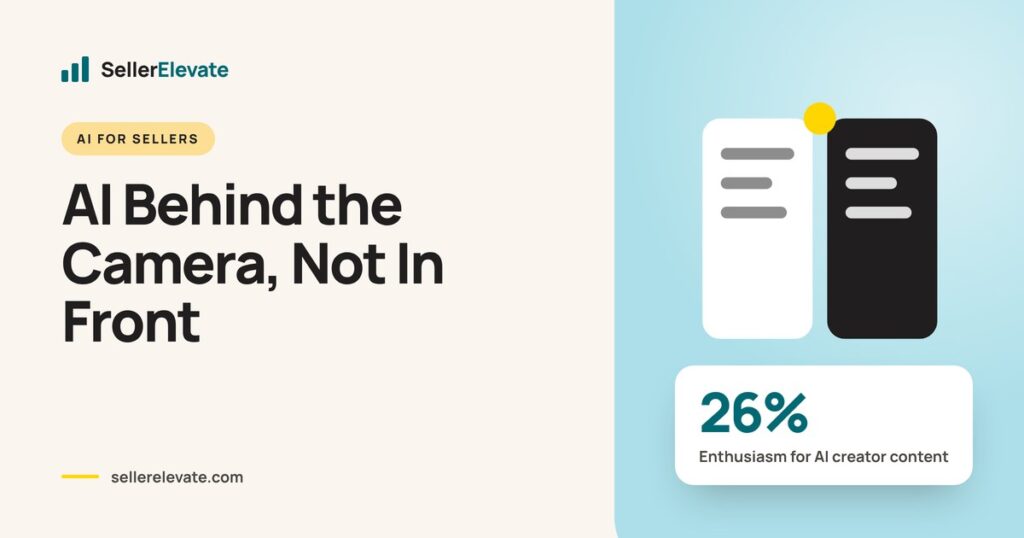
- Enthusiasm for AI-generated creator content fell from about 60% in 2023 to about 26% by early 2026, per WSJ figures.
- In our affiliate data, the top four videos out of 2,449 affiliates drove about 57% of video revenue.
You can use AI on TikTok Shop, but not as the voice or face doing the selling. Since June 2026, TikTok Shop bans AI-generated voices, prerecorded narration and static-image content in promotional livestreams and shoppable videos, and AI-generated models or scenes in product images need a visible “AI-generated” label.
So the real question is not “AI or creators?” It is which jobs AI can do without breaking rules or losing trust, and which still need a person on camera. Here is where we land, as of October 2026.
Why are sellers switching to AI avatars?
Cost and speed. AI Weekly’s summary of the Wall Street Journal report (July 15, 2026) describes TikTok Shop being “flooded with AI-generated product videos, some built on synthetic avatars and some on digital duplicates of real creators.” AI clips can be “spun up in minutes for a few dollars and A/B tested across dozens of variants,” compared with the script, lighting, takes and edits a human creator needs.
The commission side pushes the same way. Reports say TikTok Shop affiliate payouts that were around 20% dropped to closer to 10% to 15% in some categories in June 2026, which we cover in our commission cuts post. When creators cost more relative to the margin left, a few-dollar AI clip looks attractive.
And TikTok’s own ad system is rewarding it. Shopifreaks, citing Business Insider (July 20, 2026), reported affiliates losing ground to AI-generated influencers and product imagery that brands and GMV Max push into the feed, with some brands publishing hundreds of times a month without paying creators or sending samples.
What does the AI voice ban actually prohibit?
Shopifreaks reported the policy on June 9, 2026. TikTok Shop bans “AI-generated voices, prerecorded narration, and static-image content from its promotional livestreams and shoppable videos.” It applies to every seller and creator. Key details:
- Lives must be spoken in real time. NetInfluencer quotes the rule as requiring “real-time verbal or sign language communication.”
- Still frames are capped at half the screen. Slideshows, looping footage, screen recordings and product-page screenshots are also out, per NetInfluencer.
- Shoppable videos need real footage. NetInfluencer reports a minimum of three seconds of dynamic content shot in real-world environments, with camera movement and the creator’s face visible alongside the product.
- Penalties include commission restrictions, content removal and account bans.
The line TikTok draws, in Shopifreaks’ words: AI as “a behind-the-scenes production tool” is fine. AI as the “customer-facing salesperson” is not.
Product images have their own rule. Soona’s guide to TikTok Shop image requirements (July 13, 2026) says AI-generated imagery needs a visible “AI-generated” label when AI creates the substance: a model who does not exist, a scene never shot, a product dropped into a fabricated environment. Color correction, cleanup and background removal are treated like normal editing. Undisclosed synthetic content risks reduced distribution and takedowns.
There is a legal layer too. In the Business Insider piece, advertising lawyer Robert Freund warned that synthetic influencers claiming personal product experience “could violate the FTC requirement that testimonials reflect honest opinions.” Shopifreaks adds that both the EU and New York now require brands to disclose synthetic characters in ads.
And violations count against your shop. Under the Account Health Rating, any video linked to your listing affects your score, which we explain in our Account Health Rating guide.
Do shoppers trust AI creator content?
Less than they used to. The WSJ figures cited by AI Weekly show enthusiasm for AI-generated creator content fell from about 60% in 2023 to about 26% by early 2026, and roughly half of consumers say they worry about brands posting AI content without disclosure.
That is the commercial problem with AI avatars on TikTok Shop specifically. The platform works because a person holds the product and says what they think of it. An avatar can copy the format but not the reason people trust it. Once a disclosure label is attached, which the rules increasingly require, the trust gap is visible on screen.
Our own data points the same way. In our TikTok Shop affiliate program analysis, across 2,449 affiliates, the top four videos drove about 57% of video revenue. TikTok Shop revenue is concentrated in a few videos that land. Volume of variants is not what produced that; real creators with an audience and a genuine reaction did.
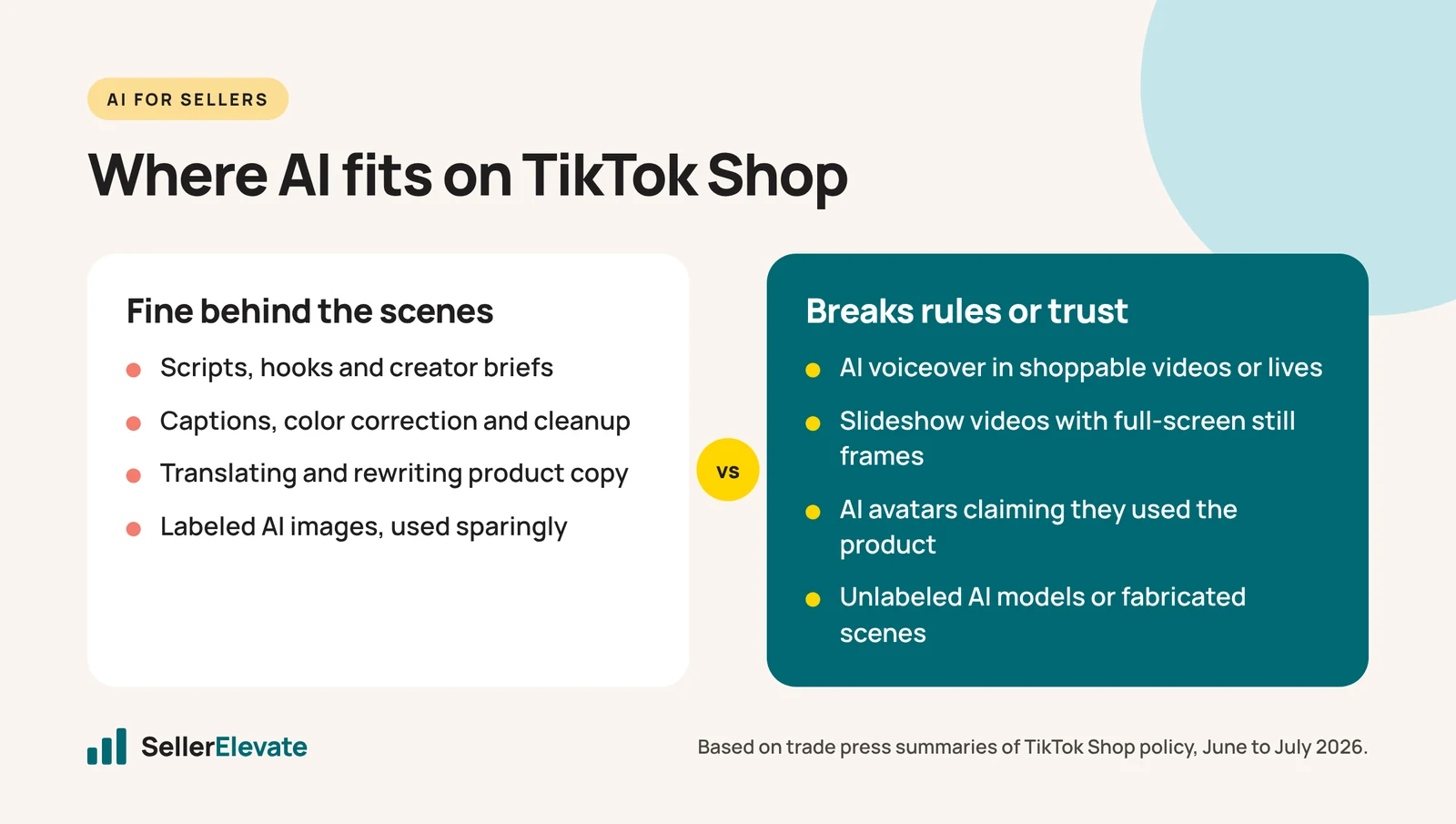
Where is AI fine, and where does it break the rules?
| Use | Status as of October 2026 | Our view |
|---|---|---|
| Scripts, hooks, briefs for human creators | Behind the scenes, allowed | Use it. Saves time, no rule risk. |
| Editing, captions, color correction, background cleanup | Treated as normal editing for images | Use it. |
| Translating or rewriting product copy | Behind the scenes, allowed | Use it, then check claims by hand. |
| AI voiceover on a shoppable video or live | Banned | Do not use. |
| Slideshow or static-image shoppable video | Still frames capped at half the screen | Do not build around it. |
| AI-generated model or scene in product images | Allowed only with a visible “AI-generated” label | Use sparingly; real photos usually convert better for trust. |
| AI avatar “reviewing” the product as if it used it | FTC testimonial risk, disclosure required in some places | Do not use. |
| AI variants of a winning human video, re-voiced | Voice rule applies; disclosure rules apply | Do not use. |
The pattern: AI is a production tool, not a performer.
So should you use AI avatars at all?
For most Amazon brands entering or scaling on TikTok Shop, no, not as the selling content. Three reasons.
- Rule risk lands on your shop. The ban comes with commission restrictions and bans, and affiliate videos feed your Account Health Rating. A cheap AI video that gets flagged can cost more than it earns.
- The trust numbers are going the wrong way. A drop from about 60% to about 26% enthusiasm is not a channel you want to build a brand on.
- The upside is concentrated in real creators. If a handful of videos drive most of the revenue, your job is to find and fund those creators, not to flood the feed.
Where AI earns its place is everything around the creator: research, briefs, hooks to test, editing and listing copy. That makes each human video cheaper and better rather than replacing it.
A hypothetical comparison to show the trade-off. Say a creator video costs you a $40 sample plus 15% commission on a $30 product, so $4.50 per order. Ten AI clips at a few dollars each cost less up front. But if one AI clip is flagged and pushes your health rating below 150, you lose new listings and campaigns for 7 days. In November, that can cost more than a month of creator commissions.
What we'd do this week
- Audit what is live. Search your product listings for linked videos with AI voiceover, slideshow formats or synthetic presenters. De-link anything that breaks the June policy.
- Check your images. Any AI-generated model or scene in your product images needs a visible “AI-generated” label, or should be replaced with real photography.
- Update creator briefs. State that voiceover must be the creator’s own voice, recorded with the video, and that no AI avatars or voice clones may be used. Add the de-linking right to your agreement.
- Move AI budget upstream. Use AI tools to draft hooks, scripts and briefs, then pay humans to perform them.
- Rebalance creator spend. If commission cuts tempted you toward AI, look instead at targeted collaborations with your best-performing creators. Our TikTok Shop management team can help identify which ones to keep.
Rules here are as of October 2026, based on trade press summaries of TikTok’s policies. Confirm the current wording in Seller Center and TikTok’s Seller Academy before acting.
Frequently asked questions
Can I use an AI voice clone of a real creator on TikTok Shop?
No, not in shoppable videos or promotional lives. The June 2026 policy bans AI-generated voices and prerecorded narration and requires real-time spoken or signed communication in lives. A voice clone presented as the creator also raises FTC testimonial concerns if it implies personal product experience that did not happen.
Do AI-edited product photos need a label on TikTok Shop?
Only when AI creates the substance of the image, such as a model who does not exist, a scene that was never shot or a product placed into a fabricated environment. Soona reports that color correction, cleanup and background removal are treated like normal post-production and do not need the "AI-generated" label.
Is AI content legal in ads outside TikTok's own rules?
It depends where you sell. Shopifreaks reports that both the EU and New York now require brands to disclose synthetic characters in ads, and advertising lawyer Robert Freund warned that synthetic influencers claiming personal experience could breach FTC testimonial rules. Get legal advice before running AI presenters in paid media.
Why is GMV Max showing AI videos instead of my affiliates?
Business Insider, as summarized by Shopifreaks, reported that brands and TikTok's GMV Max system increasingly push AI-generated influencer videos and imagery into the feed, sometimes hundreds of posts a month. Review which creatives GMV Max is using for your products and remove any that break the AI voice or labeling rules.
Sources
- AI Weekly: TikTok Shop sellers turn to AI avatars, sidelining creators (WSJ) (Jul 15, 2026)
- Shopifreaks: TikTok Shop bans AI-generated voices and static-image content (Jun 9, 2026)
- NetInfluencer: TikTok Shop bans AI voices and prerecorded audio from promotional livestreams (2026, date not shown)
- Soona: TikTok Shop image requirements in 2026 (Jul 13, 2026)
- Shopifreaks: Affiliates losing income to AI-generated influencer videos (Business Insider) (Jul 20, 2026)
Get the honest version of your numbers
A free account audit from the person who would actually run your account.